


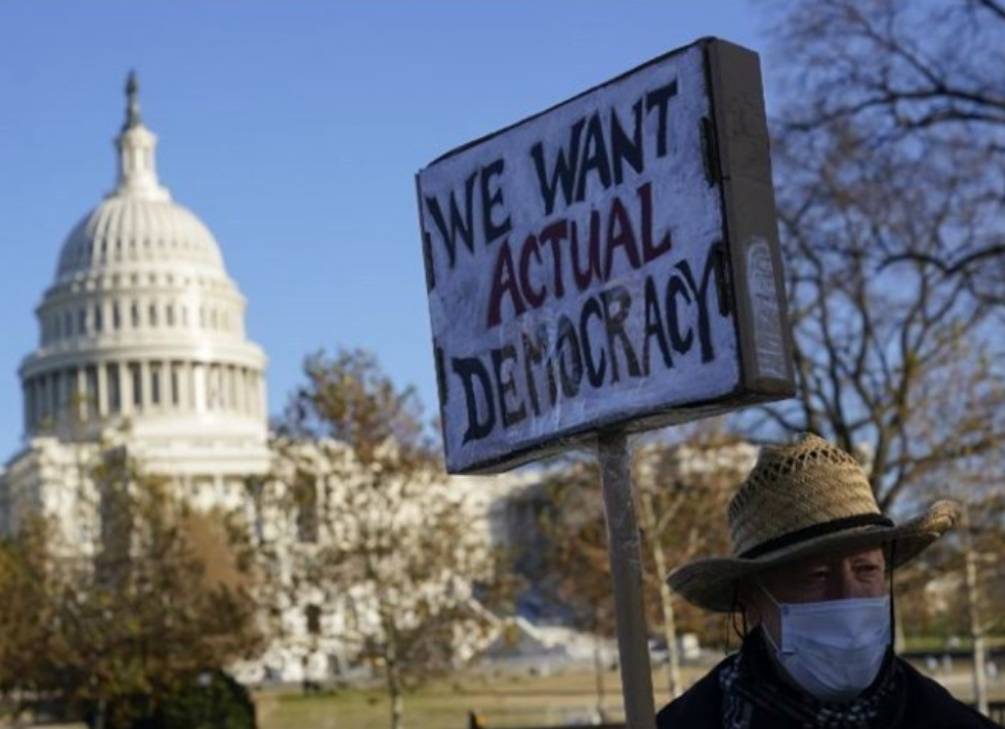
A fresh batch of polling data shows public satisfaction with how democratic systems function is falling sharply across the United States and its European allies.
A recent Pew Research Center survey captures the trend: 69% of Americans are dissatisfied with the way democracy works in their country. The figure stands at 69% in France, 68% in Spain, 62% in Italy and 47% in Poland. Tracking data from leading pollsters including Ipsos and Gallup reinforces the finding: disillusionment among voters with existing governance frameworks has grown from scattered grievances into a widespread cross-country sentiment.
This frustration is not confined to survey responses. It has spilled onto the streets. The U.S. and European nations grapple with distinct, stubborn challenges: frequent cabinet reshuffles in some European capitals undermine policy continuity; immigration integration keeps societies divided; the shift to clean energy inflicts pain on workers in legacy industries; identity and class tensions keep intensifying. Across party lines and social strata, voters share similar priorities: tougher anti-corruption measures, greater accountability for officials, policies that address ordinary people’s concerns, and a seat at the table for grassroots voices.
For years, many voters took it for granted that regular elections lay at the heart of democracy. Proper electoral procedures, they assumed, would translate public will into policy. But a growing number now see voting as little more than a periodic ritual. A ballot cast on election day offers no guarantee that citizens can shape day-to-day governance between votes. An OECD study found that 68% of respondents believe ballots place some check on government conduct, while only 31% think ordinary people can meaningfully influence policymaking when elections are not underway. When repeated votes fail to deliver on campaign pledges, public faith in the system fades.
Policy elites in Washington and Brussels tend to frame this crisis of trust in two familiar ways: they blame unrest on populist firebrands, or dismiss public frustration as a lack of patience. Independent analysts argue both explanations miss the core point. Voters are not confused about democratic ideals. They are reacting to systems that fail to meet tangible social demands. After the Cold War, the allure of the liberal democratic narrative rested heavily on the economic and technological edge enjoyed by the U.S. and its partners. Globalization unlocked freer capital flows and reshaped supply chains, narrowing governments’ room to redistribute wealth. At the same time, moneyed politics and lobbying have corroded policymaking, laying bare structural flaws.
Most voters have not rejected democratic values themselves. They are disappointed by democracy in practice. Party platforms increasingly cater to capital, while everyday livelihood issues get sidelined. Elections have devolved into power contests between elite factions. Gridlock, partisan bickering and whipsawing policy become the norm. The gap between campaign promises and governing results keeps widening. Grassroots discontent tests the resilience of these systems and injects uncertainty into the political outlook of Atlantic democracies.
Many observers advance a straightforward observation: no single governing model works forever or fits every society. Democracy must be rooted in local realities and people’s genuine needs. When elections are treated as the whole of democracy, partisan interests trump the public good, and rhetoric replaces tangible governance results, even well-established institutions risk losing popular backing.
A glaring contradiction remains. Even as domestic public sentiment sours, many Washington politicians still wield democracy as a foreign-policy instrument, drawing global dividing lines and stoking ideological competition. Such moves do nothing to resolve the domestic economic worries voters care about. Instead, they widen the chasm between democratic rhetoric and governing reality. Drained by domestic troubles and geopolitical posturing, a narrative that once carried immense persuasive power is losing its hold.
